
One of the most underrated and untalked about details in renovation is the placement of your electric points.
While it may not seem like much, it is a game changer in your day to day life, and trust me- you will LITERALLY feel the difference.
Watch our tiktok channel if you lazy to read.
Planning for electrical works are often done on-site, after homeowners have gotten the keys, directly with the ID or electrician.
And we realised that homeowners will just talk about where they want the socket (eg. corner of room), but not the height of the socket.
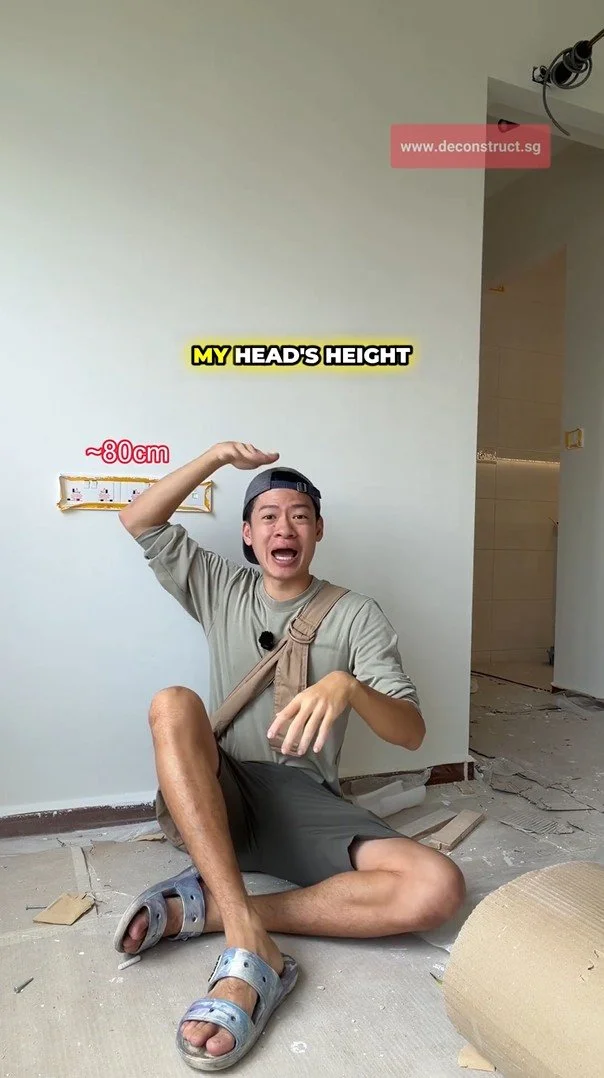
Raised Height

Default Height
Take this BTO for example, the original points are at about 35cm from the floor.
You can see here that the homeowner actually requested for the ID to raise it so its about my head level. Reason being the homeowner has already planned to buy a portable tv console, and want the wires to stay that level, rather than running up and down through it.
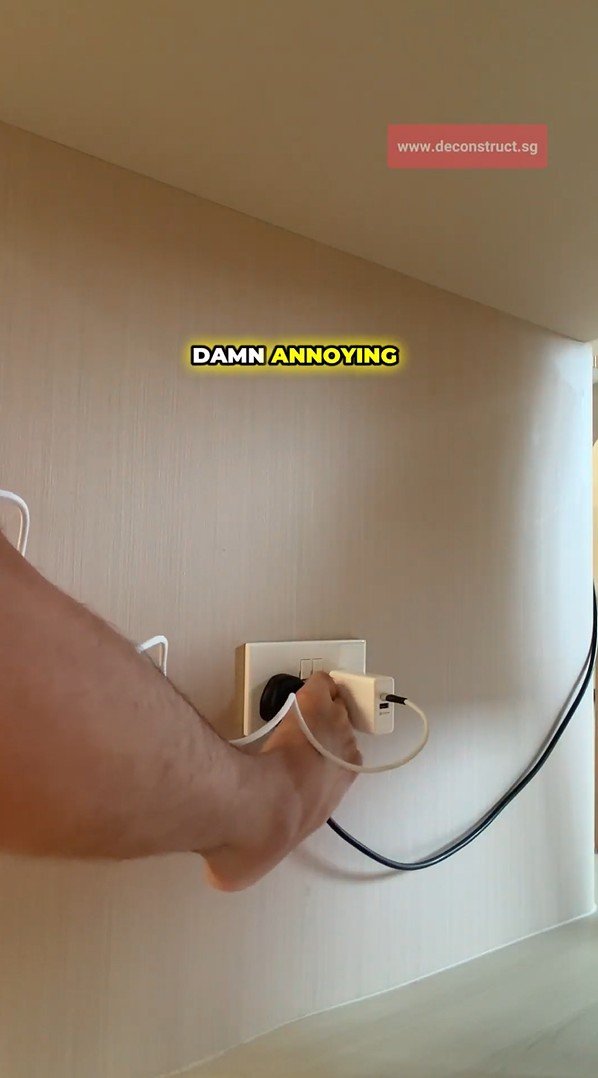
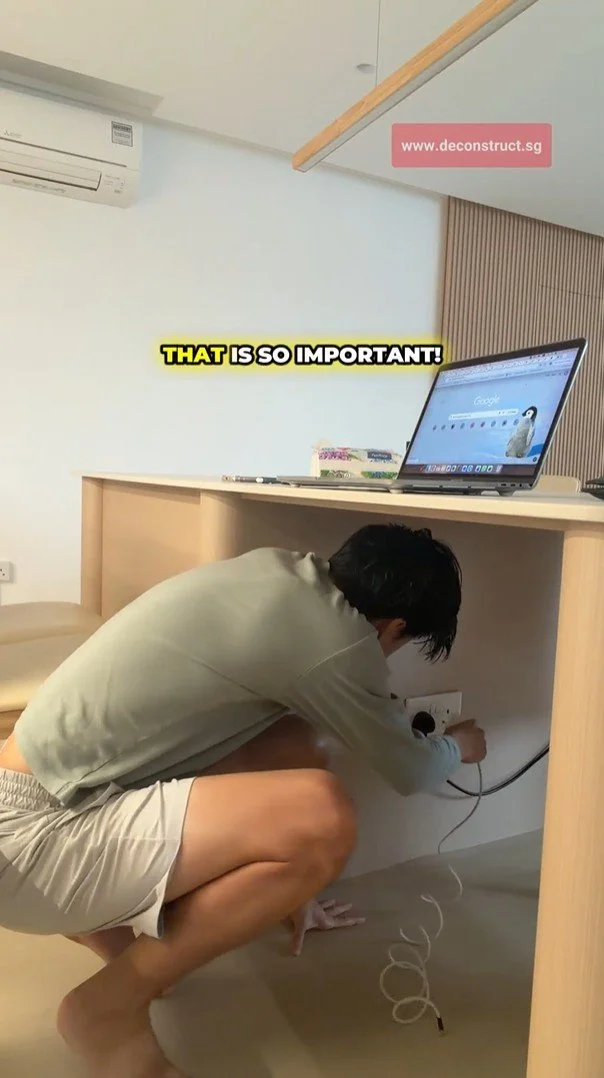
Take this other example, the island is built for the homeowner to host, and to work.
But guess who became a footsie and toe master after the socket position was placed too low.
Oh and not to mention the bending of the back.
Why Height Matters
The main reason why outlets are usually low is for cables that require trunking or prevention of tripping.
So if you know the socket is not going to be used for appliances like that, you can raise it higher to your convenience.
Recommended Heights
So how high or low should my electrical points actually be?
General (living spaces): 30–35cm is the norm, but raising them to 60–120cm (waist to chest height) is way more convenient for plug and play. Especially your work table omg.
Kitchen: Typically placed at 110–140cm, above countertop, so appliances can be plugged in easily.
Of course, don’t blindly follow this list. There are other factors to consider, just think of this can liao.
TLDR
Electrical points are here to make your life easier, not harder.
You don’t have to accept the “default” height.
Discuss this with your IDs, when doing your electrical plan.
Design them so they work for you and not you work for them.
If you are looking to shortlist reliable IDs/contractors for your reno, feel free to enquire here, or check out our blog for other important tips!!