
How Sliding Doors can Save Space
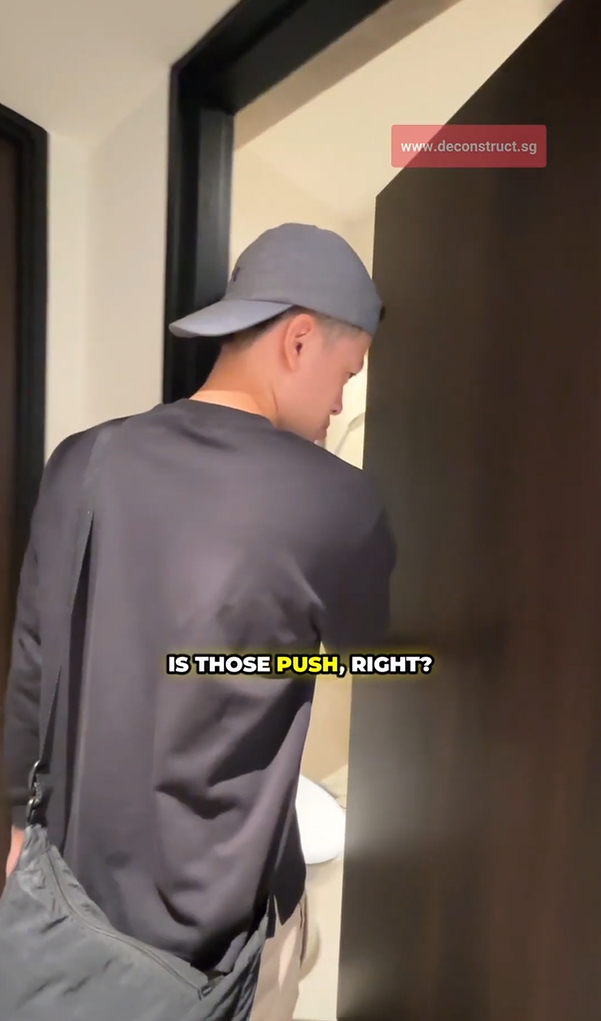
Most houses by default come with the standard push‑open swing door.
It’s functional, sure, but it eats into your space, especially for current BTOs where the bathrooms are getting smaller.
Every time you open it, you need to squeeze past the arc and it can become damn awkward if you are not Ms Universe body shape.
Then how?
Check out our Youtube for the full home tour video!
Watch our tiktok if you lazy to read.
The Simple Fix
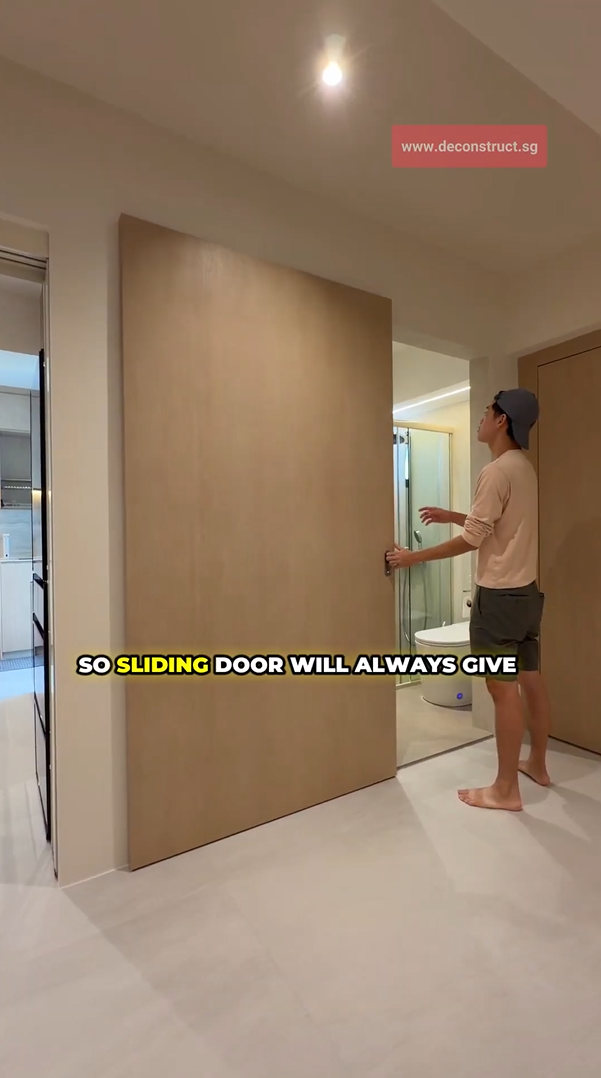
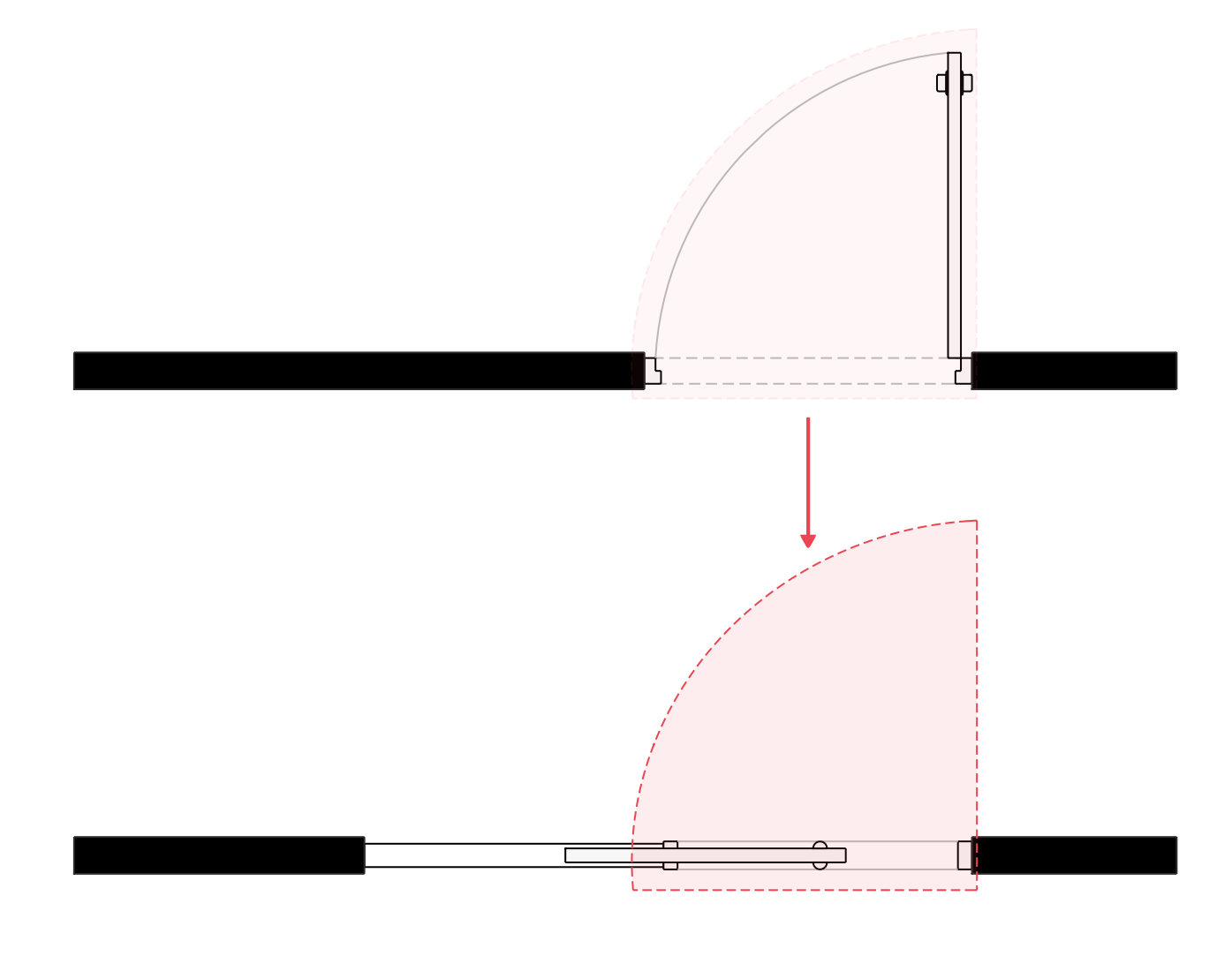
One smart solution is to convert the swing door into a sliding door.
The change is simple but powerful.
With no swing arc, the bathroom instantly feels bigger.
You reclaim space that was previously wasted.
Functionality AND Aesthetics
The normal swing door is capped at roughly 3 feet (W) by 7 feet (H), while sliding door can be bigger (it needs to cover the whole area so people outside cannot peekaboo).
This means that visually you can create something meaningful, rather than “just another bathroom door”.
Take this Shoji door that many Japandi homeowners love - it is almost always sliding for a reason.
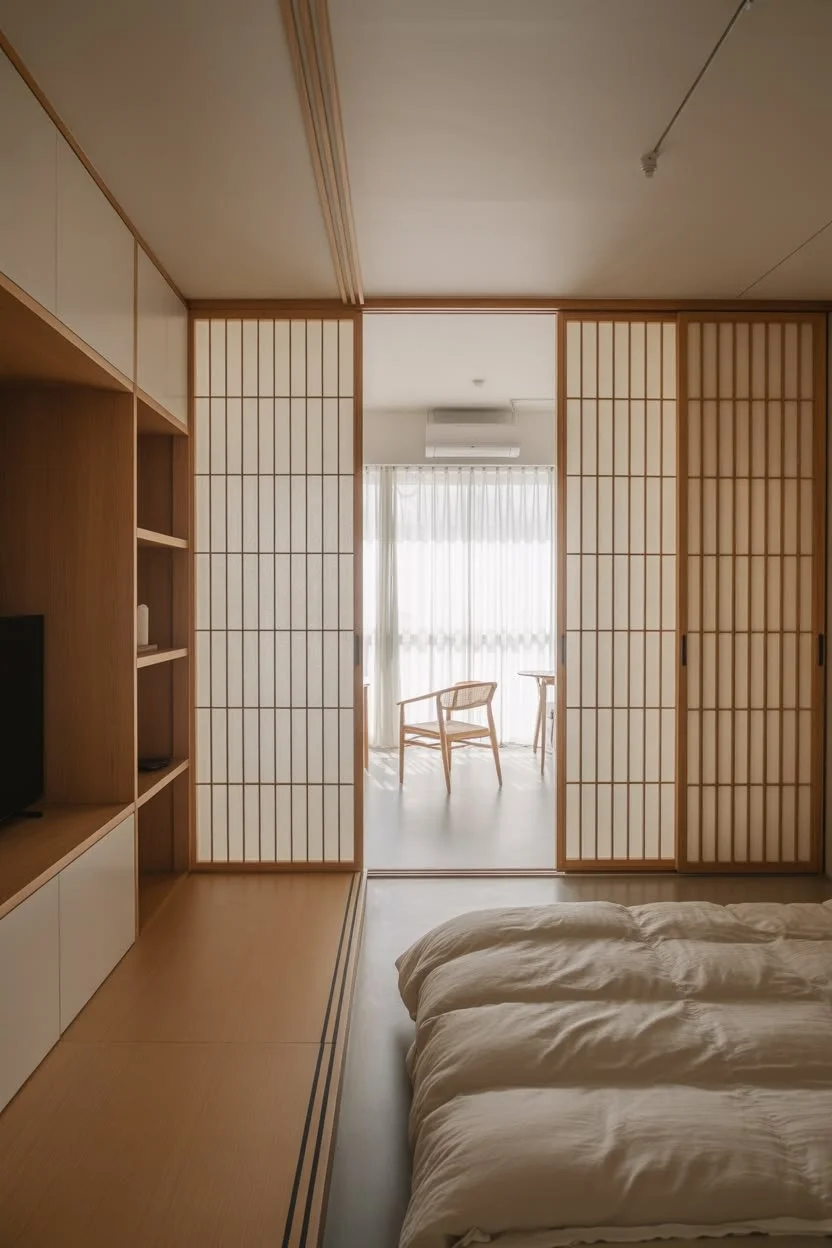
Cr: Pinterest
The Requirements
Of course, you can’t always do sliding doors.
You need somewhere the doors can slide into, meaning the tracks are covered and the doors don’t stick out of nowhere when fully open and block space.
That’s where this ID got clever.
They extended a false wall next to the real one, creating a neat pocket for the door to tuck away.
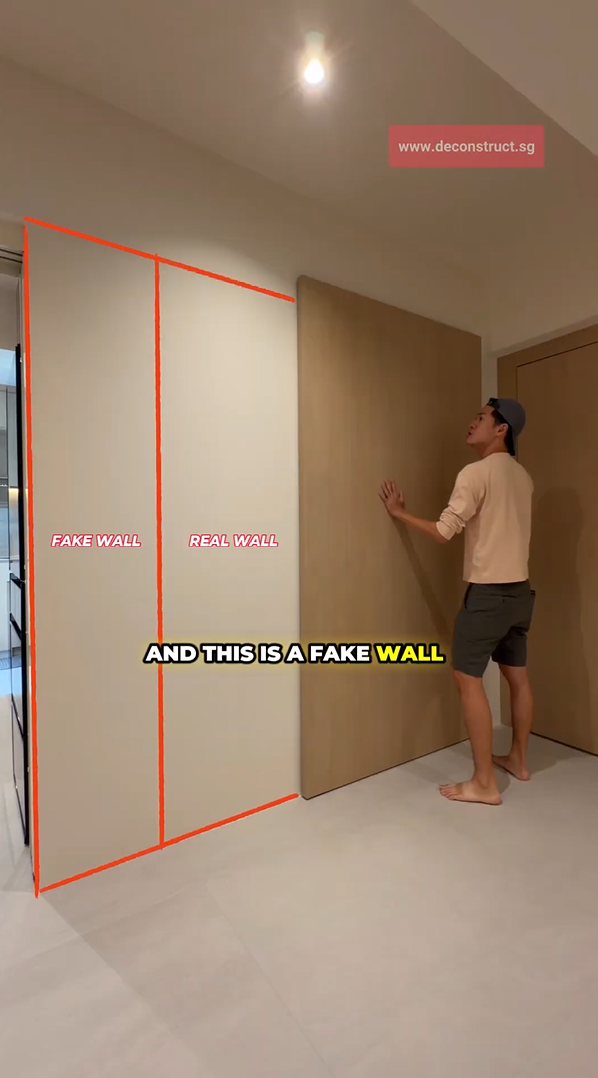
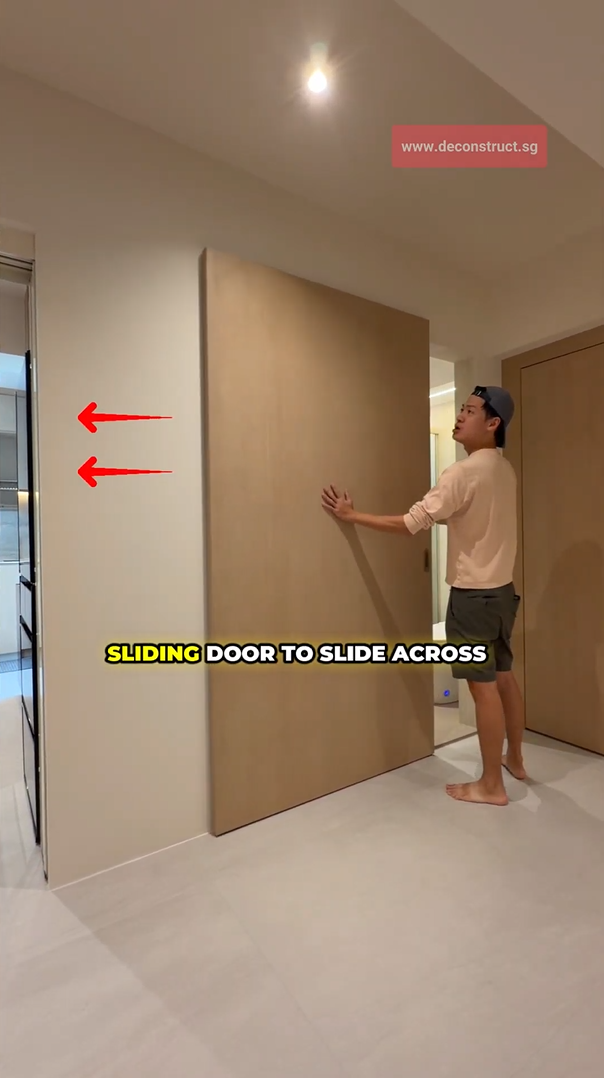
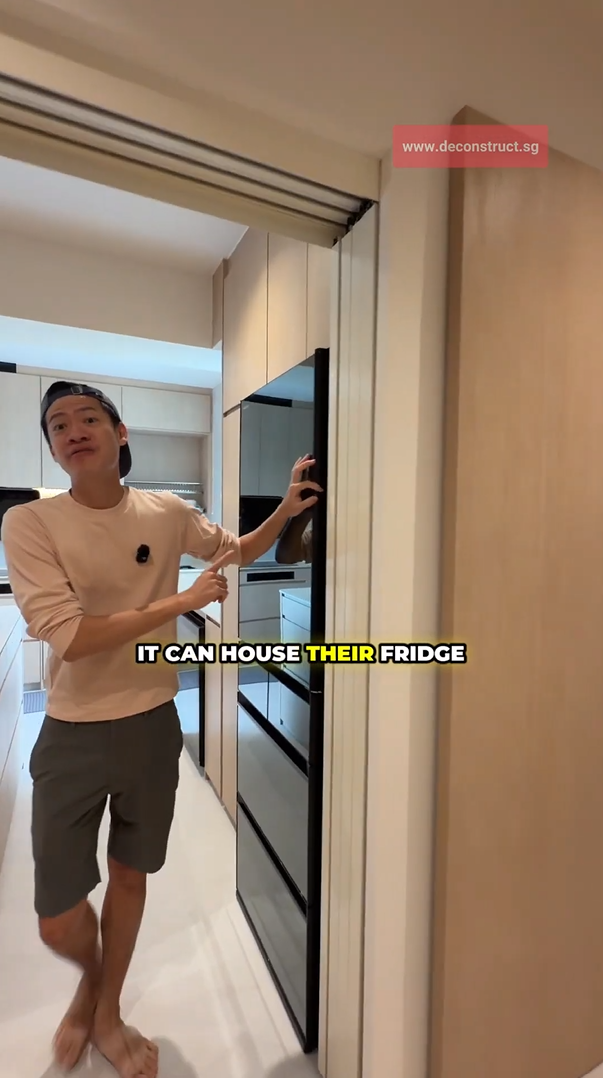
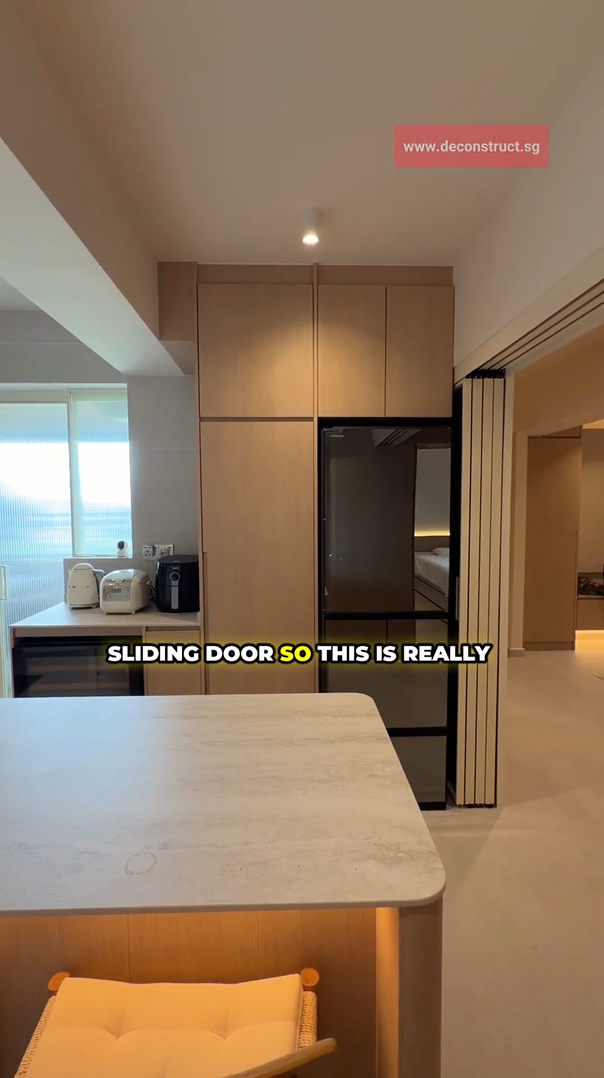
On the other side, this same false wall doubled up as a partition to house the fridge, syncing perfectly with the sliding door design.
It’s multifunctional, space‑saving, and seamless!
TLDR
Swing doors eat space. Sliding doors give it back.
Aesthetically it gives you many more options too.
But to make it work, you’ll need enough space to “house” the sliding door.
Very very underrated imo, if you can make it work.
Lastly, if you need reliable IDs/contractors recommendations, enquire here. It’s free with no obligations.